Empty Nest Lens: The Fear Trap

A boat tied to the dock is safe—but it was never built to stay there. Neither were you.
Overcoming Fear and Finding Identity in Christ
When Fear Quietly Begins Making Your Decisions
Fear rarely announces itself.
More often, it quietly begins making our decisions.
Most of us don't think of ourselves as fearful. We pay our bills, show up for church, care for our families, and keep our commitments. From the outside, life appears steady.
Yet somewhere along the way, our questions begin to change.
"What if this doesn't work?"
"What if I make the wrong decision?"
"What if I don't have enough?"
"What if I've already missed my opportunity?"
"What if this season of life never becomes meaningful again?"
Those questions rarely arrive overnight. They slip quietly into our thoughts until we hardly notice them.
They often surface after the children leave home, when retirement moves from a distant dream to a calendar date, after a health scare, when a career unexpectedly ends, or simply when life doesn't unfold the way we imagined.
I know this trap more personally than I ever imagined.
At first, fear simply influences a few decisions. Then it begins limiting our dreams. Eventually, if we're not careful, it begins shaping our identity.
Without realizing it, we stop asking,
"Where is God leading me?"
and begin asking,
"Where will I be safest?"
That is the Fear Trap.
Unlike the Control Trap, which convinces us we can manage every outcome, the Fear Trap quietly convinces us not to move at all.
It doesn't always shout. More often, it simply whispers until its voice becomes the one we trust most.
Fear Rarely Looks Like Fear
If fear always looked like panic, we would recognize it immediately.
Most of the time, it disguises itself as wisdom.
We tell ourselves, "I'm just being realistic. Maybe this isn't the right time. I should wait until I'm more certain. I don't want to make a mistake."
Sometimes those thoughts reflect genuine wisdom.
Other times, they're simply fear wearing wisdom's clothing.
Fear rarely introduces itself by saying, "I'm afraid." More often it sounds like:
"I'm just being realistic."
"Maybe next year."
"I don't want to make a mistake."
"I'm just protecting what I have."
"It's probably too late."
There is nothing wrong with careful planning. Scripture encourages thoughtful decisions. The trap isn't exercising wisdom—it's allowing fear to become the lens through which we see ourselves, our future, and even God.
When fear quietly becomes our primary counselor, we stop living by faith and begin living by self-protection. Over time, our world grows smaller—not because God has stopped calling us forward, but because fear has quietly convinced us to stand still.
The irony is that fear often disguises itself as protection. It tells us we're simply protecting what matters most—our health, our finances, our relationships, and our future. Protecting those things isn't wrong.
Fear isn't dangerous because it makes us cautious. It's dangerous when protecting life becomes a substitute for fully living it.
Somewhere along the way, safety becomes our highest goal instead of faithful obedience.
Five Ways Fear Quietly Shapes Identity
1. Fear of the Future
One of the greatest challenges of the empty nest is that the future suddenly feels unwritten. For years, much of life was structured around children, careers, schedules, and responsibilities.
Now the calendar has open spaces, the routines have changed, and the future feels uncertain.
Instead of asking,
"Lord, what are You preparing me for?"
we begin asking,
"What could go wrong?"
Fear has a way of replacing anticipation with anxiety. Faith doesn't eliminate uncertainty; it reminds us that the Author of our future already stands there.
2. Fear of Losing Relevance
Many people quietly wonder,
"Do I still matter?"
Children no longer need us in the same ways. Careers begin to wind down, and some of the roles we've held for decades come to an end.
Without realizing it, we begin measuring our worth by how indispensable we remain.
But God has never measured our value by our usefulness. Purpose doesn't disappear simply because a previous assignment has ended. Sometimes the end of one role is God's invitation into another.
3. Fear of Loneliness
Few transitions feel as quiet as an empty house. Children establish lives of their own, parents pass away, friends relocate, and the phone rings less often.
The silence grows louder.
Fear whispers,
"This is how life will always be."
God whispers,
"I will never leave you nor forsake you."
His presence doesn't remove every ache, but it does remind us that we never walk through those seasons alone.
4. Fear of Financial Uncertainty
Money has always carried emotional weight. Retirement simply gives those emotions more questions to answer.
Will there be enough?
What if the market changes?
What if my health changes?
What if I become a burden?
Those are honest concerns.
Planning wisely honors God. Living as though everything depends upon us does not.
Fear convinces us our security rests in what we can control.
Faith reminds us our ultimate security has always rested in the One who has faithfully provided all along.
5. Fear of Beginning Again
Perhaps this is the fear that quietly keeps the most people stuck.
Trying something new.
Serving in a different ministry.
Starting the business.
Writing the book.
Launching the podcast.
Building new friendships.
Dreaming again.
Fear asks,
"What if I fail?"
Faith asks a better question.
"What if God is already waiting for me on the other side of obedience?"
The greatest tragedy isn't failing. It's allowing fear to keep us from discovering what God had prepared all along.
Perhaps the Fear Trap doesn't always look like standing on the edge of something frightening. Sometimes it looks like remaining in a place that's simply become too comfortable to leave.
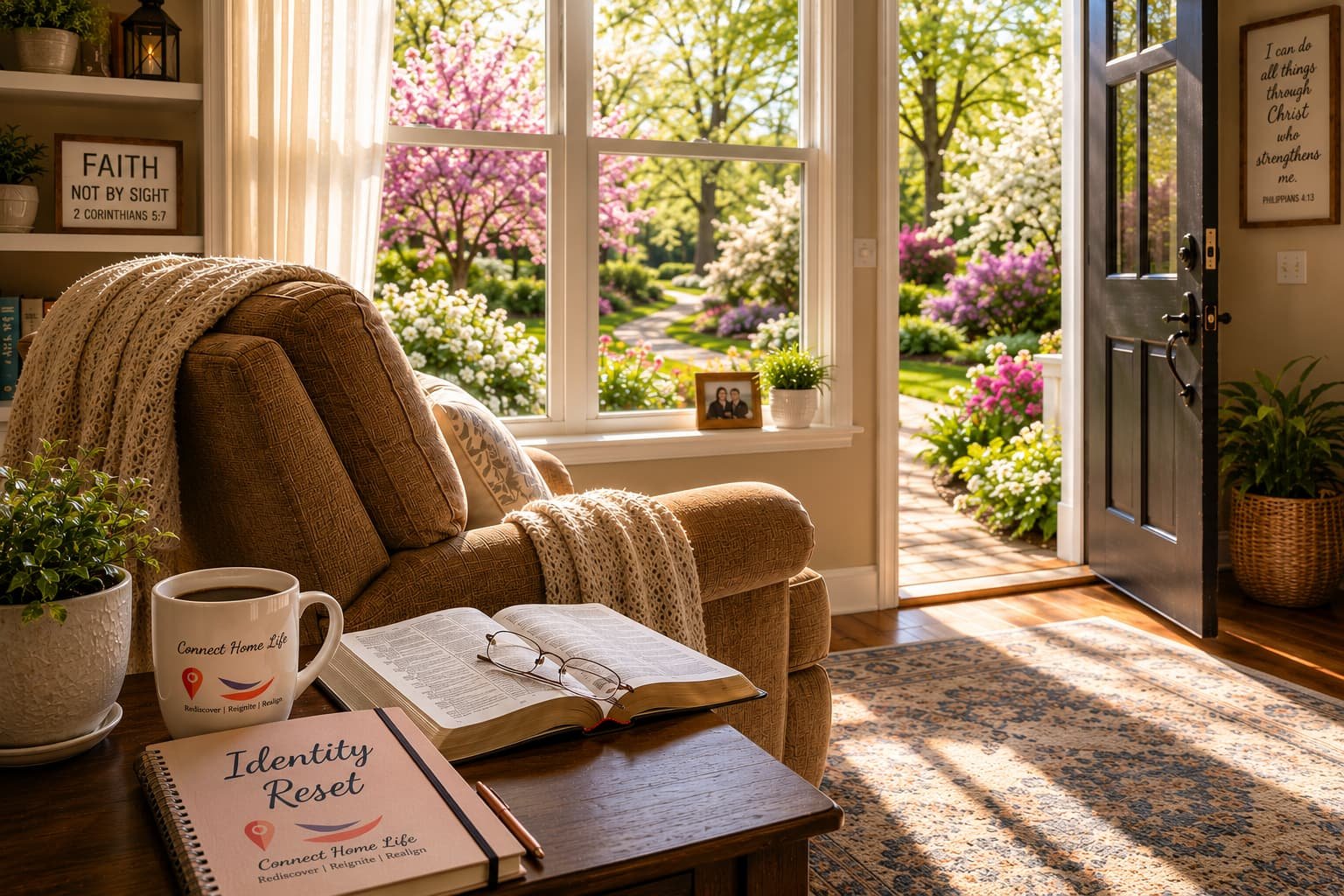
Comfort becomes a trap when it replaces calling.
What Research Says
Fear is one of the brain's most natural responses to uncertainty. Researchers have found that when the future feels unclear, our minds often fill the gaps with imagined worst-case scenarios. Over time, those imagined outcomes can feel just as real as actual experiences, causing us to hesitate, avoid risk, and settle for what feels safe rather than what is meaningful.
The encouraging news is that resilience grows much like physical strength—through repeated practice. Studies consistently show that confidence rarely comes before action. More often, confidence grows after we take small, intentional steps through uncertainty.
Perhaps that's why growth seldom begins with a giant leap.
More often, it begins with one faithful step.
What Scripture Says
One of the most repeated commands in Scripture is simply,
"Do not be afraid."
Not because frightening circumstances don't exist, but because God's presence is greater than our uncertainty.
Abraham left home without knowing where he was going.
Joshua accepted impossible responsibility.
Esther risked everything to save her people.
Peter stepped out of the boat while the storm was still raging.
None of them were fearless.
They simply learned to trust Someone greater than their fear.
Faith has never required certainty. It has always required trust.
Five Ways to Escape the Fear Trap
1. Name Your Fear
You cannot surrender what you refuse to acknowledge.
Ask yourself,
"What am I actually afraid of?"
Often, simply naming our fear begins to loosen its grip.
2. Remember God's Faithfulness
Fear has a short memory.
Faith remembers.
Look back over your life.
How many times has God carried you through seasons you never thought you would survive?
The same God who was faithful then has not changed.
3. Don't Confuse Possibility with Probability
Fear loves to imagine the worst.
Wisdom asks,
"Is that actually likely?"
Not every possibility deserves equal attention.
Don't allow imagined outcomes to become today's reality.
4. Take the Next Faithful Step
God rarely reveals the entire journey.
He usually gives us enough light for the next step.
You don't need enough courage for the next ten years.
You only need enough faith for today.
5. Keep Choosing Faith
Fear may continue to whisper. It simply doesn't have to make your decisions.
Each act of obedience reminds us that God is trustworthy. Each faithful step weakens fear's influence. Over time, faith becomes the louder voice.
The Cost of Fear
Fear rarely ruins our lives in a single moment.
More often, it quietly collects small regrets over time.
The conversation we never had.
The opportunity we never pursued.
The ministry we never joined.
The friendship we never began.
The prayer we never prayed.
The dream we quietly set aside.
Eventually, the greatest regret isn't usually what we tried and failed to do. It's what fear convinced us never to attempt.
Fear promises to protect us from disappointment.
Too often, it also keeps us from experiencing the life God may be inviting us to live.
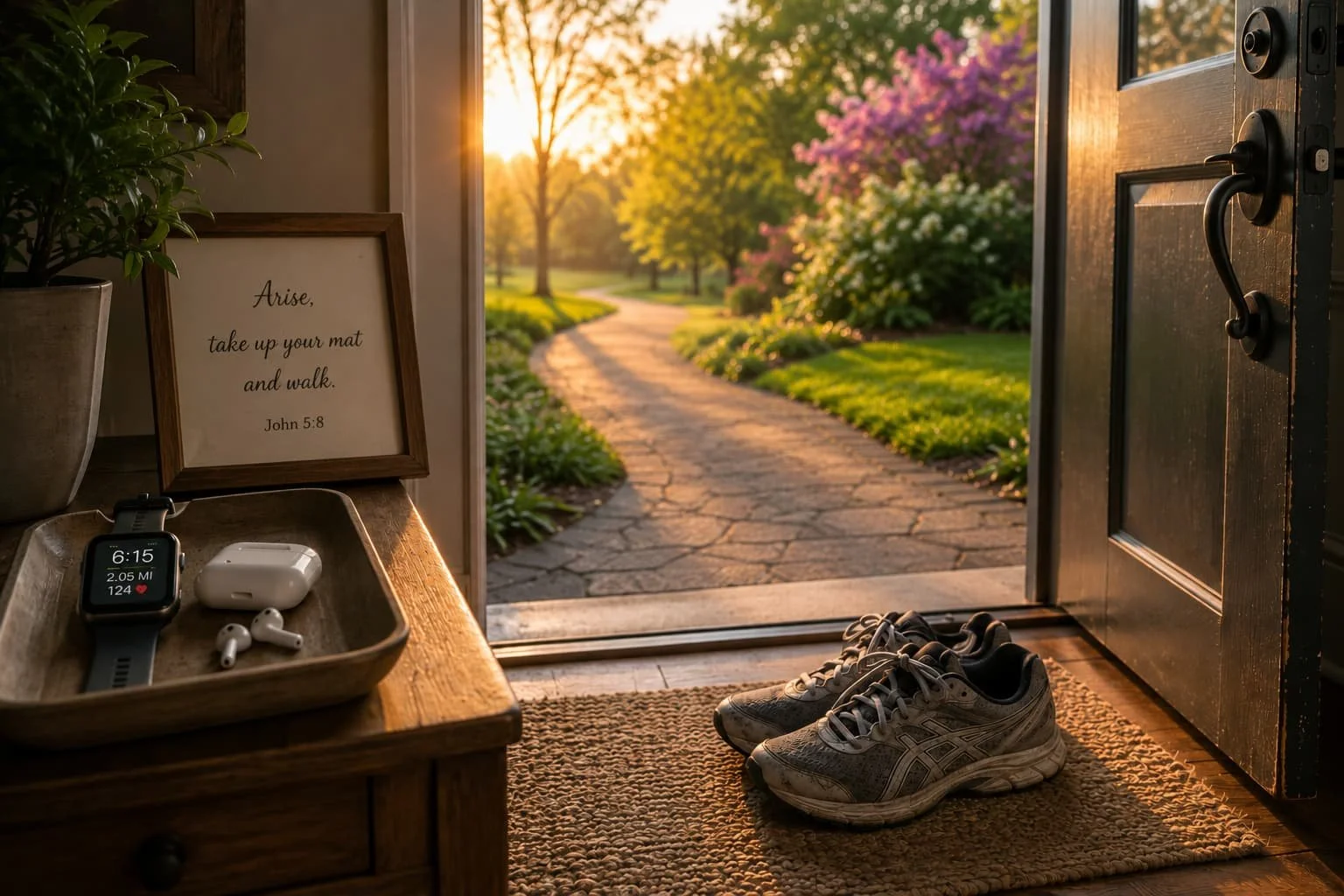
Sometimes the hardest step isn't the first mile. It's walking out the door.
My Story
Looking back, I always assumed I was the risk-taker in our family.
My father struggled to take even calculated risks. He preferred what was familiar and predictable. I understood that about him, but I never imagined fear could quietly become part of my own story.
For most of my life, I embraced change.
I rode my bicycle with no hands.
I changed career plans.
I moved away from home.
I accepted new jobs.
Josena and I opened our hearts to adoption—both domestically and internationally.
Risk never seemed to define me.
Then came my five-vessel bypass surgery.
The surgery saved my life.
Fear quietly changed it.
As I recovered, I wasn't just healing physically.
I had lost my health.
Eventually, I lost my job.
The future I thought I understood disappeared almost overnight.
I still had dreams.
I wanted to write blogs.
I wanted to launch podcasts.
I imagined other ministries and businesses.
The opportunities never disappeared.
I simply stopped saying yes to them.
Not because they weren't good ideas.
Because I was afraid.
Afraid of losing the little piece of life I felt I still had left.
Looking back, I wasn't trying to waste my life. I was trying to protect it.
For a while, I confused protecting my life with living my life.
Fear made those two things feel like the same thing.
They aren't.
Fear had quietly begun making my decisions. Ironically, the lesson that changed me didn't come from a sermon.
It came from cardiac rehab.
After open-heart surgery, they don't ask you to run.
They ask you to walk.
I still remember those first days.
Two minutes out.
Two minutes back.
That was enough.
Then the walks became longer.
The longer walks became short jogs.
The jogs became runs.
Just a few days ago, that run was more than ten miles.
Since my surgery, I've lost more than sixty pounds.
Today I'm writing these words. I'm launching a podcast.
I'm embracing dreams that once felt too risky.
Fear didn't disappear. It simply stopped being the loudest voice. One faithful step at a time, faith outlasted fear by one more moment.
If fear has quietly been making your decisions, it doesn't have to write the rest of your story.
Take the next faithful step.
Then another.
I'll be praying for you as you do.
God didn't preserve my life so I could spend the rest of it protecting it. He preserved it so I could faithfully live it.
Reflection Questions
What fear has been quietly making decisions in my life?
Where have I confused wisdom with self-protection?
What opportunity, dream, or relationship have I postponed because it felt safer to wait?
How has God already proven Himself faithful in seasons when I couldn't see the outcome?
What is one faithful step God may be inviting me to take this week?
Guided Journal Prompts
1. Name the Fear
Write honestly about the fear that has been occupying the most space in your mind lately. Is it fear of failure, loneliness, financial uncertainty, aging, rejection, or something else? When did you first begin noticing its influence?
2. Listen to the Two Voices
Draw two columns in your journal.
On one side, write what fear has been telling you.
On the other hand, write what you believe God would say about the same situation through His Word.
Which voice have you been trusting most?
3. Remember God's Faithfulness
List three seasons when you were uncertain about the future, but God faithfully carried you through.
How does remembering His past faithfulness strengthen your faith for today?
4. One Faithful Step
If fear were no longer making this decision, what is one small step you believe God is inviting you to take this week?
Not the entire journey.
Just the next faithful step.
Write it down and pray over it.
Then take it.
5. Finish This Sentence
Imagine yourself one year from now, looking back on today.
Complete this sentence without overthinking it.
If faith outlasted fear by one more moment, I would ____________.
Then sit quietly.
Pray.
Ask God if that blank represents your next faithful step.
Closing Prayer
Father,
Thank You for meeting me even in the places where fear has quietly shaped my decisions.
Reveal the fears I've hidden behind caution, comfort, or self-protection. Give me the wisdom to recognize the difference between waiting on You and simply waiting because I'm afraid.
Help me trust that the life You've given me is meant to be faithfully lived, not merely protected. Give me the courage to take the next faithful step, even when I cannot see the entire path ahead.
Remind me that Your presence is greater than my uncertainty, Your promises are stronger than my fears, and Your purpose for my life is not finished.
Today, I choose faith over fear—one faithful step at a time.
In Jesus' name,
Amen.
Central Theme
Fear was never meant to become your identity.
It may visit every life.
It may speak loudly.
But it doesn't have to make your decisions.
God never promised a fear-free life.
He promised to be present in the midst of it.
As we learn to trust Him, fear gradually loses its authority—not because our circumstances become certain, but because His character remains faithful.
Coming Next
Over the past several weeks, we've uncovered the many traps that quietly shape our identity.
From our roles and relationships to our performance, self-reliance, control, comparison, shame, and fear, each one has invited us to build our identity on something that could never truly sustain us.
Yet beneath every trap has been the same invitation from God—to discover an identity that isn't rooted in what we do, what others think, what we've experienced, or what we fear, but in who He says we are.
In our two-part capstone, we'll bring the entire journey together as we discover what it means to build an identity that remains secure through every season of life.
Courage isn't the absence of fear. It's faith that outlasts fear by one more moment.
🌱 Capstone Verse
"For we walk by faith, not by sight."
— 2 Corinthians 5:7 (NKJV)
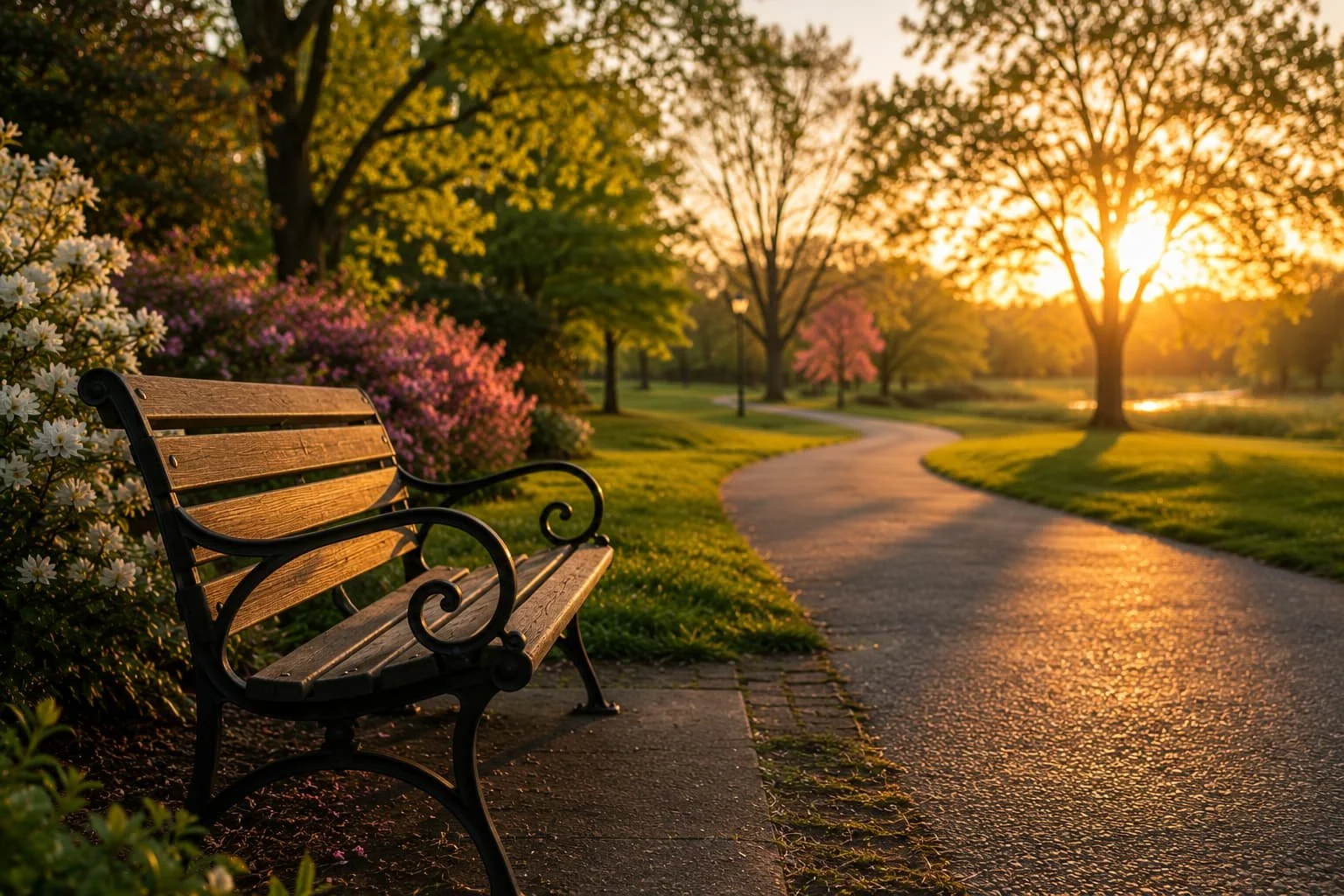
Faith doesn't require seeing the whole journey. Only the courage to take the next step.
Go Deeper
Growth doesn't end when you finish reading. If today's message spoke to your heart, here are a few ways to continue your journey.
📖 Continue in Scripture
Spend time reflecting on these passages as you continue learning to walk by faith instead of fear.
Isaiah 41:10
Joshua 1:9
Psalm 56:3–4
Proverbs 3:5–6
Matthew 14:22–33
2 Timothy 1:7
2 Corinthians 5:7
📚 Recommended Reading
These books offer additional biblical and practical insight into overcoming fear and embracing God's purpose.
The Gift of Fear — Gavin de Becker
(understanding healthy versus unhealthy fear)In a Pit with a Lion on a Snowy Day — Mark Batterson
(embracing God-sized opportunities)Get Out of Your Head — Jennie Allen
(breaking destructive thought patterns)Fearless — Max Lucado
(living confidently in God's promises)
🏡 Explore the Identity Series
Continue exploring how God shapes our identity through every season of life.
📑 Sources & Research
This article draws upon biblical teaching, contemporary research on fear, resilience, and identity formation, and the resources listed above.